In an era of rapid change, financial leaders seek tools that blend precision, agility, and foresight. Digital twins answer that call by transforming raw data into living models.
By harnessing virtual replicas of financial and operational systems, organizations can make informed decisions with unprecedented clarity and confidence.
Understanding Digital Financial Twins
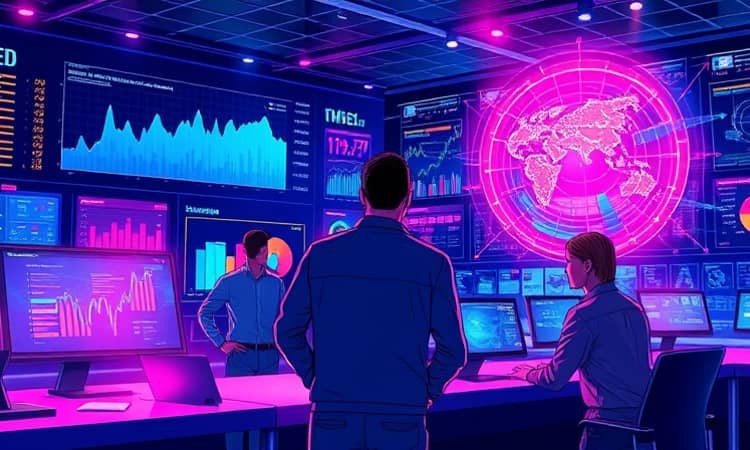
A digital financial twin is a sophisticated virtual representation of financial and nonfinancial metrics spanning the entire product lifecycle and value chain. Unlike static reports, these twins continuously ingest data from ERP systems, IoT sensors, customer interactions, and ESG monitors.
Such a living simulation fed by real-time data enables stakeholders to explore performance drivers, forecast outcomes, and uncover hidden risks before they materialize.
Imagine a finance team probing the profitability of a custom vehicle configuration down to specific components, or a compliance group stress-testing regulatory changes without impacting live systems.
Overcoming Key Financial Challenges
Traditional financial models often suffer from fragmented data, slow updates, and lack of context. Digital twins address these issues head-on:
- Data Limitations: Fill gaps in product-lifecycle coverage and unlinked financial/nonfinancial metrics.
- Business Shifts: Support shorter development cycles, individualized offerings, and service hybrid models.
- Evolving Requirements: Embed ESG factors, regulatory transparency, and agile steering into core processes.
By uniting these dimensions, teams gain a holistic view of costs, revenues, and stakeholder impacts in real time, enabling faster, more confident decision-making.
Unlocking Specific Benefits in Modeling and Simulation
With a digital financial twin, organizations unlock a suite of powerful capabilities:
- Granular Profitability Analysis: Attribute revenues and costs to individual units or components, such as VIN-specific equipment values.
- Transparent Lifetime Value Simulation Capabilities: Forecast full product or customer lifetime revenues, service sales, and end-of-life costs.
- Nonfinancial Integration: Balance profitability with ESG metrics like carbon accounting for optimal tradeoffs.
- Near-real-time Data Aggregation for Decisions: Drive operational, tactical, and strategic actions with up-to-the-minute insights.
- Risk-free Scenario Testing with Predictive Modeling: Model supply shocks, regulatory changes, and customer churn with zero real-world impact.
These benefits translate into tangible improvements. Consider results documented by leading consultancies:
Organizations that adopt digital twins report faster response times, leaner operations, and more accurate forecasting—outcomes that directly boost profitability and resilience.
Implementing Your Digital Twin Strategy
Rolling out a digital financial twin requires careful planning across technology, data, and people:
- Core Requirements: Scalable cloud architecture, integrated ERP platforms, in-memory databases, and high-performance simulation engines.
- Data Model Adaptation: Automate transaction attribution with enriched classification attributes spanning finance, logistics, and ESG.
- Implementation Path:
- Evolve steering approach
By following this structured approach, finance leaders can drive adoption, ensure data integrity, and maximize the impact of their digital twins.
Real-World Applications and Impact
Banks, insurers, and fintechs leverage digital twins to simulate customer journeys, predict attrition risks, and optimize cross-sell strategies. Regulatory teams model compliance scenarios without interrupting live operations.
Manufacturers use product-lifecycle twins to forecast service revenues, optimize warranty provisions, and embed carbon costs into design choices. Supply-chain managers anticipate disruptions, reroute shipments, and maintain service levels in volatile markets.
Across industries, three twin archetypes deliver value:
- Data Twins: Provide real-time visibility into profitability, inventory levels, and customer interactions.
- Systems Twins: Optimize throughput, resource allocation, and resilience to external shocks.
- Customer Twins: Enable immersive simulations for personalized marketing, sales forecasting, and onboarding experiences.
Collectively, these applications demonstrate how digital twins not only improve financial outcomes but also foster a culture of experimentation and continuous learning.
Future Outlook
As organizations embrace digital twins, the boundary between the physical and virtual will continue to blur. Advances in AI-driven analytics, edge computing, and real-time data capture will further enhance predictive accuracy and simulation depth.
Leaders who act now can position their finance teams as strategic partners in digital transformation, leveraging precise attribution of costs and revenues and actionable insights to navigate uncertainty.
By embedding digital twins at the heart of financial planning and decision-making, companies will unlock new sources of value, drive sustainable growth, and lead their industries into a future defined by agility, transparency, and resilience.