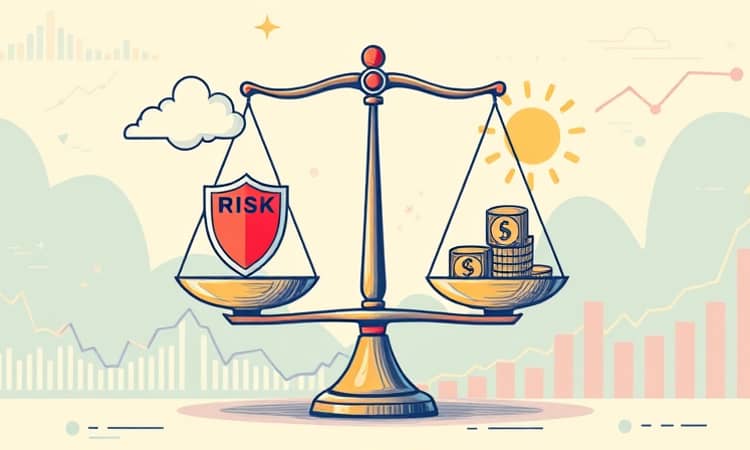
In the complex world of finance, derivatives often seem like an enigma, but they are powerful instruments that can transform how we manage risk and seek reward.
These contracts derive their value from underlying assets, such as stocks or commodities, offering a dual role in modern markets.
By understanding derivatives, you can unlock opportunities to protect your investments or amplify gains, making them essential tools for financial strategy in today's volatile economy.
Understanding the Core of Derivatives
Derivatives are financial agreements whose worth is linked to assets like currencies, bonds, or market indices.
They serve as versatile mechanisms that allow individuals and institutions to navigate price fluctuations with precision.
The primary purpose revolves around managing uncertainty and capitalizing on market movements.
This dual nature makes derivatives indispensable in global finance.
From agriculture to energy sectors, they provide a buffer against unpredictable events.
For instance, farmers use derivatives to hedge against poor weather conditions.
Meanwhile, traders employ them to speculate on future price changes.
The flexibility of derivatives stems from their ability to be tailored to specific needs.
They enhance market efficiency by enabling access to otherwise hard-to-trade assets.
This foundational understanding sets the stage for deeper exploration.
Hedging and Speculation: The Dual Functions
Derivatives excel in two key areas: hedging for risk management and speculation for potential profit.
Hedging acts as an insurance policy against adverse price movements.
It allows businesses to lock in prices and secure their financial positions.
For example, a company might use derivatives to protect against currency fluctuations.
On the other hand, speculation involves taking calculated risks for higher returns.
Speculators use leverage to amplify exposure without owning the underlying asset.
This can lead to significant gains, but it also carries substantial risks.
The balance between hedging and speculation is crucial for effective use.
Here are some practical applications of these functions:
- Hedging to mitigate losses in volatile markets.
- Speculation to capitalize on market trends with minimal capital.
- Using derivatives for portfolio diversification and risk offsetting.
Understanding when to hedge versus speculate can optimize financial outcomes.
The Four Basic Types of Derivatives
Derivatives are categorized into four primary types, each with distinct characteristics and uses.
These include forwards, futures, options, and swaps, forming the backbone of derivative markets.
Forwards are private contracts customized between two parties for future transactions.
Futures are standardized versions traded on exchanges, offering more security.
Options provide the right to buy or sell at a set price, adding flexibility.
Swaps involve exchanging cash flows over time based on underlying values.
Each type caters to different needs, from simple agreements to complex arrangements.
To clarify their differences, here is a comparison table:
This table highlights how each derivative type functions in practice.
Forwards and futures are obligatory, while options offer more flexibility.
Swaps are often used by institutions for long-term financial planning.
Grasping these basics empowers users to choose the right tool for their goals.
Advantages of Using Derivatives
Derivatives offer numerous benefits that make them attractive in financial markets.
One key advantage is leverage, which allows for amplified gains with small investments.
This means you can control large positions without significant upfront capital.
Another benefit is risk mitigation through offsetting positions.
Derivatives can move opposite to underlying assets, reducing overall exposure.
They also provide access to markets that might otherwise be inaccessible.
For example, through derivatives, you can trade illiquid commodities easily.
Customization is a major plus, especially with over-the-counter contracts.
Tailored agreements ensure that specific risk profiles are addressed.
Here is a list of key advantages:
- Leverage to maximize potential returns.
- Risk management tools for hedging against losses.
- Enhanced market efficiency and liquidity.
- Ability to trade a wide range of assets.
- Customization for unique financial needs.
These advantages demonstrate why derivatives are integral to modern finance.
By leveraging these tools, investors can optimize their strategies effectively.
Risks and Disadvantages to Consider
Despite their benefits, derivatives come with inherent risks that require careful management.
High volatility can lead to magnified losses due to leverage.
This means small market movements can result in significant financial setbacks.
Counterparty default is another critical risk, especially in private contracts.
If the other party fails to honor the agreement, losses can accrue.
Speculation, while rewarding, can lead to substantial losses if not handled wisely.
The complexity of derivatives demands a sophisticated understanding of markets.
Products like leveraged ETFs require constant rebalancing to maintain effectiveness.
Post-2008 regulations have increased oversight, but risks persist.
Here are some common disadvantages:
- Potential for large losses from leverage and speculation.
- Counterparty risk in over-the-counter transactions.
- Complexity that may confuse inexperienced users.
- Regulatory changes impacting market accessibility.
- Need for continuous monitoring and adjustment.
Awareness of these risks helps in making informed decisions.
It's essential to balance the rewards with the potential downsides.
How Derivatives are Traded and Valued
Derivatives are traded in two main venues: over-the-counter and exchange-traded markets.
Over-the-counter derivatives are privately negotiated, offering flexibility but higher risk.
Exchange-traded derivatives, like futures, are standardized and cleared for security.
Every derivative has components such as an underlier, price, and future date.
Valuation involves discounting stochastic cash flows to present value.
This links directly to underlying variables, making pricing dynamic.
Notional amounts reference the size of payments without initial ownership.
Understanding these mechanics is crucial for effective trading.
Here are key points about trading and valuation:
- Over-the-counter for customized, private agreements.
- Exchange-traded for standardized, secure transactions.
- Valuation based on underlying asset performance.
- Use of margins and daily marking-to-market in futures.
This knowledge empowers users to navigate derivative markets confidently.
Real-World Applications and Practical Tips
Derivatives find applications across various industries, from agriculture to finance.
In agriculture, they hedge against weather risks to stabilize incomes.
Oil companies use them to manage price volatility in energy markets.
Financial institutions employ swaps for interest rate management.
These real-world uses highlight the practicality of derivatives.
To get started, here are some actionable tips:
- Educate yourself on different derivative types and their uses.
- Start with exchange-traded products for lower risk.
- Use derivatives primarily for hedging before speculating.
- Monitor market conditions and adjust strategies accordingly.
- Seek professional advice if dealing with complex contracts.
By applying these tips, you can harness derivatives effectively.
They offer a pathway to greater financial control and opportunity.
Embrace them as tools, not mysteries, to enhance your economic resilience.