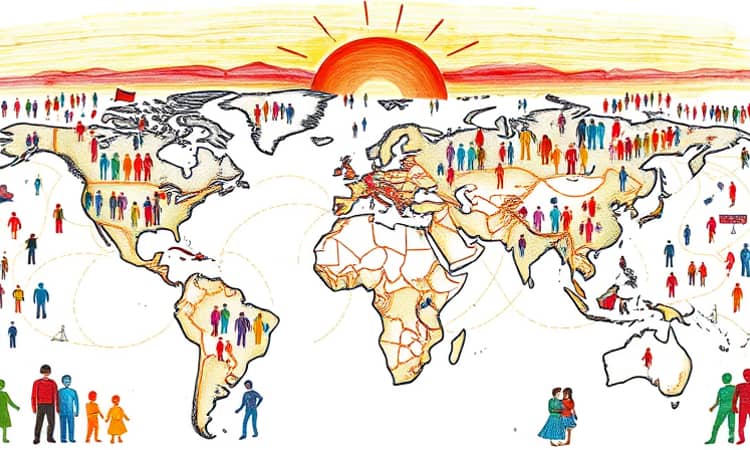
As the world population surges past 8.25 billion, societies and economies stand at a turning point. The interplay between age structures, migration, and fertility is reshaping markets and challenging leaders to adapt. This article unpacks these shifts and offers practical strategies to harness opportunities in an evolving global landscape.
World at a Crossroads: Population Trends and Projections
In October 2025, humanity reached a milestone of 8.25 billion people worldwide, an increase of 69 million since the previous year. Growth rates, though slowing to 0.85% in 2025 and an estimated 0.84% in 2026, continue to drive transformative change.
Leading nations by population at the close of 2025 include:
- India: 1.47 billion (up 12.9 million)
- China: 1.42 billion (down 3.25 million)
- United States: 347.8 million
- Indonesia: 286.3 million
- Pakistan: 256.2 million
- Nigeria: 238.7 million
The United Nations projects a peak of 10.29 billion by the late 21st century before a gradual decline. These figures underpin future resource planning and inform global policy frameworks.
Unprecedented Aging and Youth Bulges
Across regions, demographic profiles diverge sharply. Europe, North America, and parts of East Asia see rapid aging: over 18% of their populations are aged 65 and older. Conversely, Sub-Saharan Africa hosts a youth surge, with 40% under age 14.
In the United States, the Congressional Budget Office forecasts Social Security–eligible individuals rising from 349 million in 2026 to 364 million by 2056. Fertility rates remain below replacement levels, at 1.53 births per woman today, dipping further to 1.50 by 2032.
Canada anticipates its 85-plus cohort to double between 2031 and 2050, driven by the baby boomer generation. Migration will account for most growth as natural increase slows.
Economic and Market Consequences
These demographic trends yield profound market impacts. Aging societies demand expanded healthcare, retirement services, and age-friendly infrastructure. Youthful regions require investment in education, job creation, and digital connectivity.
- Labor force transformations: Working-age populations peak in many advanced economies before declining, heightening the value of experienced talent.
- Consumer demand shifts: Eldercare products and services flourish in aging markets, while youth-focused brands thrive in high-fertility regions.
- Migration dynamics: Nations with low birth rates rely on immigration to sustain growth and fill skill gaps.
Global corporations and small businesses alike must navigate these differentiated landscapes, balancing resource allocation between emerging youthful markets and mature economies.
Strategies for Businesses and Investors
Adaptation begins with data-driven insights. Companies that embrace demographic intelligence gain first-mover advantage in target markets.
Key tactical recommendations include:
- Segment customers by age and region: tailor products to generational preferences and life stages.
- Leverage strategic migration policies: collaborate with governments and NGOs to support workforce integration and skill development.
- Develop age-inclusive design: ensure services and platforms serve both tech-savvy youth and elder cohorts seamlessly.
Investors should monitor demographic projections as leading indicators. Portfolios diversified across healthcare innovation, educational technology, and sustainable infrastructure align with long-term population trends.
Building a Sustainable Future
Demographic change is not a passive phenomenon but a call to action. Governments, communities, and private sectors share responsibility for fostering resilience and inclusivity.
To thrive amid shifting demographics, stakeholders should:
- Champion lifelong learning and retraining programs to future-proof the workforce.
- Promote policies that balance family support with economic participation, sustaining healthy birth rates.
- Invest in intergenerational projects that harness the wisdom of elders and the innovation of youth.
By aligning efforts across sectors, societies can transform demographic challenges into engines of growth, equity, and global cooperation.
Conclusion: Embracing Change for Collective Prosperity
In an era defined by demographic flux, recognizing the interplay between population dynamics and economic vitality is essential. Whether responding to aging societies or harnessing the energy of youth, the strategies outlined here offer a roadmap for sustainable growth.
As individuals and organizations commit to data-informed decisions, they unlock new pathways for innovation and impact. Together, through intergenerational collaboration and strategic foresight, we can shape a future where population shifts fuel prosperity rather than hinder progress.