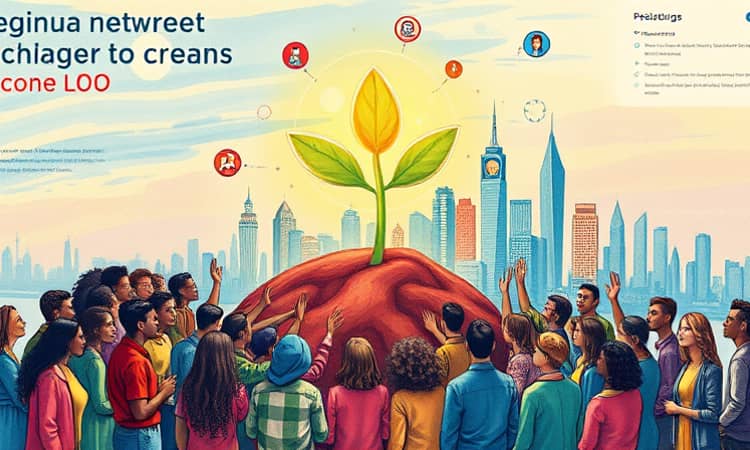
Over the last decade, crowdfunding has emerged as a dynamic and ever-expanding crowdfunding landscape, empowering creators, entrepreneurs, and social causes alike. What began as modest experiments on early platforms has matured into a global phenomenon, offering alternative financing options for startups and democratizing access to capital on an unprecedented scale.
In this article, we explore key market projections, historical milestones, segments, regional dynamics, leading platforms, trends, challenges, and future opportunities. Our aim is to inspire and equip readers with practical insights to navigate and leverage the crowdfunding ecosystem effectively.
The world is witnessing a robust growth trajectory worldwide in crowdfunding, driven by digital innovation, regulatory shifts, and changing investor attitudes. By understanding these forces, innovators can harness the power of community-driven finance to bring ideas to life.
Market Size and Growth Projections
Analysts offer varying estimates of the crowdfunding market due to differences in scope—some measure core platforms, others include peer-to-peer lending. Yet all agree on strong growth through 2034. Recent forecasts show a range from around USD 2 billion to over USD 50 billion in global annual activity.
On the low end, core crowdfunding platforms are forecast to reach about USD 2 billion by 2026. Broader counts that include P2P lending show figures exceeding USD 20 billion. Industry leaders and new entrants alike must align their strategies with both safe estimates and high-growth scenarios.
Historical Context and Evolution
Crowdfunding’s roots trace back to grassroots efforts where creative projects sought small contributions from friends and family. With the launch of early platforms, projects gained visibility and credibility, prompting institutional interest and the development of enhanced due diligence and verification processes.
When the COVID-19 pandemic struck, crowdfunding morphed into a lifeline for healthcare needs, emergency relief, and community support. Millions of donors rallied behind campaigns for medical equipment, migrant aid, and social welfare, showcasing an unprecedented surge of digital generosity.
Key milestones include the rise of equity and tokenized models, secondary trading marketplaces, and the integration of blockchain for transparent transactions. Markets such as China matured rapidly, accounting for 37% of global volume, while North America became an innovation hub and emerging regions leveraged crowdfunding for financial inclusion.
Diverse Types and Segments
Crowdfunding now spans multiple models, each serving distinct goals and audiences. Understanding these segments is essential for campaign design and investor targeting.
- Reward-based: 74% of total volume, popular for creative and product launches.
- Debt-based: 51% share in 2026, attractive to startups seeking structured loans.
- Equity-based: Fastest-growing, especially in the U.S. and Europe under evolving regulations.
- Donation-based: Steady for social causes, led by platforms like GoFundMe.
- Blockchain and token models: Emerging segment offering transparency and liquidity.
Additionally, campaigns vary by end-user: startups and small businesses account for over 53% of activity, while nonprofits, individual creators, and niche industries fill the remainder. Technology, healthcare, sustainability, and media remain the dominant verticals, with clean energy and ethical ventures on the rise.
Regional Dynamics
Geography plays a major role in crowdfunding maturity and regulation. North America led with a 39.6% share in 2025, fueled by a vibrant startup culture, widespread platform adoption, and supportive legal frameworks. The U.S. alone accounted for USD 0.58 billion by 2026.
Asia-Pacific, spearheaded by China’s massive P2P lending networks and indigenous platforms, commands over one-third of global volume. Europe follows with cross-border equity initiatives and harmonized rules that encourage cross-region investments. Latin America, the Middle East, and Africa are forging ahead via impact-driven campaigns that expand financial access.
Key Players and Competitive Landscape
Platform leaders capture roughly 36% of revenue, while a diverse field of niche operators continues to emerge. Kickstarter remains the go-to for reward-based creative projects. Indiegogo offers flexible funding with global reach. GoFundMe dominates donation campaigns, especially across North America.
Equity platforms such as SeedInvest, Crowdcube, and Crowdfunder serve startup investors, often incorporating secondary trading features. Specialized sites focus on healthcare research, renewable energy, and social enterprises, using tailored compliance and marketing support to stand out.
Drivers, Trends, and Challenges
The crowdfunding sector is propelled by several key forces and faces notable obstacles:
- Blockchain integration for enhanced transparency and security.
- Artificial intelligence for fraud detection and campaign optimization.
- Institutional capital entering retail platforms, blurring lines between public and private markets.
- Niche and impact-focused marketplaces prioritizing sustainability and social good.
- Regulatory evolution, especially around equity offerings, requiring ongoing adaptation.
Trust remains paramount. Campaigns with clear goals, robust reporting, and third-party oversight enjoy higher success rates. As platforms integrate with traditional banking networks and payment systems, friction will continue to decline, opening doors to broader participation.
Opportunities and Future Outlook
The future of crowdfunding looks bright. Impact investing and ESG-aligned campaigns are set to drive the next wave of growth, supporting projects that deliver both financial returns and social benefits. Increasing digital literacy and investor education will further expand addressable markets.
Emerging regions, particularly in Africa and Latin America, present untapped potential for community-driven finance. By leveraging mobile payment solutions and micro-investing models, innovators can unlock capital for underserved entrepreneurs.
In the coming years, we anticipate crowdfunding to become a standard financing tool for early-stage innovation, seamlessly integrated with traditional channels. Advances in data analytics, secure payments, and cross-border compatibility will reduce barriers, allowing ideas to flourish irrespective of geography or background.
Whether you are launching a creative project, scaling a startup, or championing a cause, the crowdfunding ecosystem offers a pathway to transform vision into reality. Embrace its tools, stay informed of trends, and build a compelling campaign narrative. By doing so, you’ll join millions who have already harnessed the power of community to fund tomorrow’s innovations.