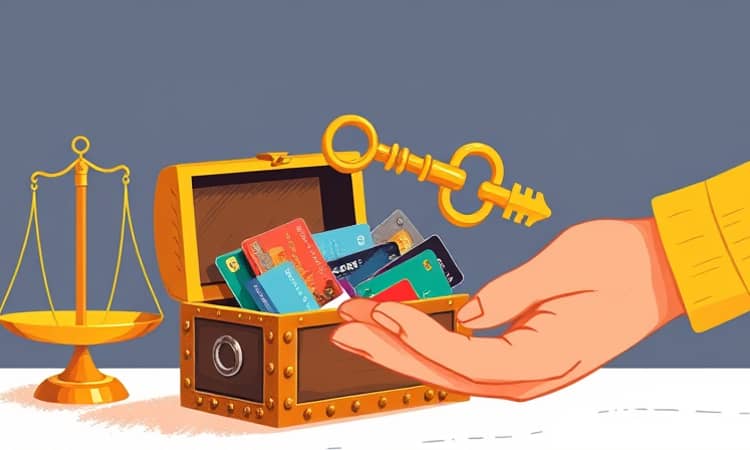
Credit card limits are not just arbitrary numbers on your plastic; they are the gateway to your financial flexibility and a critical factor in determining your overall borrowing power.
This simple figure can shape your ability to secure loans, buy a home, or achieve other life goals.
Understanding this relationship is the first step toward financial mastery and empowerment.
The Core Concept: Limits and Borrowing Power
Credit card limits represent the maximum amount you can borrow on a card, acting as a cap on your spending.
However, lenders view this limit differently when assessing your borrowing power.
They assume you could use the full limit at any time, treating it as potential debt.
This assumption reduces your overall borrowing capacity for major loans like mortgages.
For instance, a $10,000 credit card limit might cut your borrowing power by $50,000 to $60,000.
This multiplier effect can be surprising, but it's a key reality in lending decisions.
Factors That Shape Your Credit Card Limits
Lenders evaluate multiple elements to set your limits or assess your borrowing power.
Here are the primary factors involved:
- Income and stability: Higher and stable income supports larger limits, but it's not the sole determinant.
- Credit score and history: Your score, based on FICO models, heavily influences approvals and terms.
- Existing debts and DTI ratio: All outstanding obligations lower your power, with card limits considered fully.
- Credit utilization and behavior: On-time payments boost scores, while high usage or misses harm them.
- Other influences: Loan types, family size, and economic buffers also play a role.
These factors interact to create a personalized financial profile for lenders.
Credit Utilization: The Silent Score Killer
Credit utilization ratio is balances divided by limits, and it's crucial for your credit health.
Keeping this ratio under 25% to 30% is ideal for optimal scores.
Thresholds vary, but generally:
- Below 25%: Green zone, indicating good management.
- 50% to 75%: Amber zone, a warning sign for lenders.
- Over 75%: Red zone, significantly harming scores and borrowing power.
High utilization signals risk, reducing your ability to secure future loans.
Quantified Impacts on Borrowing Power
The effects of credit card limits are not abstract; they can be measured precisely.
Lenders use formulas that assume full limit usage over time, even if balances are low.
For example, a $2,000 balance on a $30,000 limit is treated as $30,000 of debt.
This table summarizes key impacts:
These numbers highlight the tangible consequences of credit decisions.
How Credit Cards Affect Major Loans
Credit cards specifically impact broader borrowing power, especially for significant purchases.
For mortgages, lenders calculate repayments on the full limit over about three years.
This treats the limit as an ongoing expense, regardless of actual usage.
Post-approval, new cards can trigger re-assessments of total liabilities.
High utilization lowers scores, limiting future borrowing opportunities.
Understanding this helps in planning for home ownership or other large investments.
Actionable Strategies to Improve Your Situation
You can take control of your credit limits and borrowing power with proactive steps.
Here are practical strategies to implement:
- Reduce unused credit limits: Cutting limits on idle cards can free up borrowing power.
- Pay down high-interest debts: Prioritize cards or loans to lower your debt-to-income ratio.
- Boost your credit score: Focus on timely payments and low utilization for better terms.
- Manage credit utilization wisely: Aim to use less than 25% of your total available limits.
- Increase income or down payments: This directly enhances your financial profile for lenders.
- Refinance existing debts: Lower rates can preserve borrowing power and aid payments.
These actions empower you to reshape your financial future positively.
Real-World Scenarios and Considerations
Credit card impacts vary based on individual circumstances and lender policies.
Consider these scenarios to see how principles apply in life:
- A family of four might see borrowing power vary by over $50,000 due to dependents.
- Marketplace changes, like interest rate hikes, can affect stress test buffers.
- Lender variations mean some may be more lenient or strict in assessments.
- Global contexts, from Australia to the US, share universal lending principles.
Always tailor strategies to your specific situation for the best outcomes.
Conclusion: Mastering Your Financial Destiny
Credit card limits are a powerful tool in your financial arsenal, not just a spending cap.
By understanding their role in borrowing power, you can make informed decisions.
Focus on managing utilization, improving scores, and reducing unnecessary limits.
This journey toward financial clarity is within reach for everyone.
Take the first step today to unlock greater opportunities and secure your dreams.