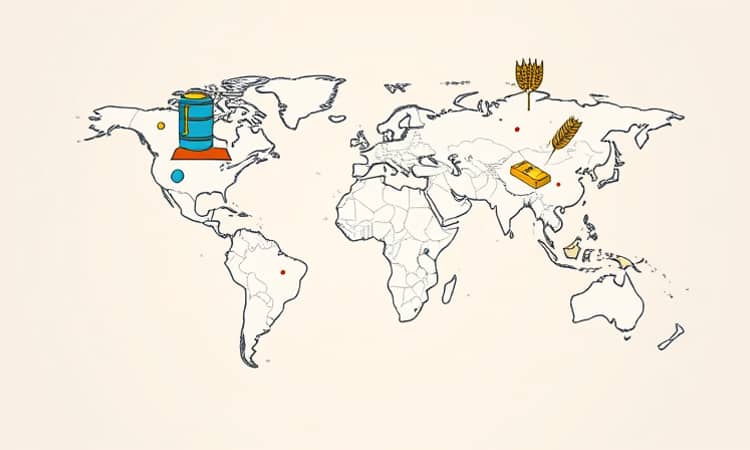
The year 2026 heralds a pivotal moment for global commodity markets, with prices poised for moderation amidst transformative economic and technological forces.
This article unpacks the key trends that will define raw material dynamics, offering practical guidance for investors and industry stakeholders alike.
Global commodity prices are projected to decline, yet opportunities abound in sectors driven by innovation and sustainability.
Overall Commodity Market Trends for 2026
Expect a fourth consecutive year of price moderation, with a projected 7% decline in global commodity prices for 2026.
This trend stems from subdued economic activity, persistent trade tensions, and policy uncertainties.
However, structural shifts like the energy transition and electrification are injecting optimism into the market.
These changes are creating robust demand for metals and infrastructure, supporting long-term growth prospects.
Conflicting views exist among analysts, highlighting the complexity of forecasting in this volatile environment.
- Accelerating energy transition boosts demand via EVs, renewables, and grid upgrades.
- Resilient global GDP growth and Fed rate cuts provide a supportive backdrop.
- Geopolitical risks and central bank buying favor precious metals as safe havens.
- Risks include weather extremes, supply disruptions, and potential growth slowdowns.
Investors must balance these factors to navigate the evolving landscape effectively.
Energy Commodities: A Shift in Dynamics
Energy prices are forecast to fall 10% year-over-year in 2026, following a 12% decline in 2025.
This drop is driven by abundant supply outpacing sluggish demand growth, particularly in oil markets.
Brent crude averages $60/bbl in 2026, down from $68/bbl in 2025, reflecting a surplus scenario.
Recovery is possible in the second half of 2026, supported by solid demand and moderating non-OPEC+ supply.
- Natural gas shows mixed trends: US benchmarks up 11%, while Europe declines 11% due to higher imports.
- Fuel oil spreads widen from Nigeria's Dangote RFCC return, impacting refining margins.
- EV adoption cools oil demand, with over 20 million EVs sold in 2025, shifting focus to metals.
- Uranium bullish to $100/lb by end-2026, driven by nuclear capacity growth and supply risks.
The energy sector's evolution underscores the broader transition towards cleaner alternatives.
Metals and Minerals: The Green and AI-Driven Boom
Metals and minerals prices are expected to remain broadly stable in 2026, with base metals rallying late in 2025.
This stability is fueled by resilient demand from infrastructure, green investments, and the AI revolution.
Copper supply shortages are a key concern, with prices potentially rising up to $14,000 per ton.
Aluminum also faces supply constraints, making it critical for lightweight vehicles and grid applications.
The bull market is shifting from precious to industrial metals like copper and aluminum in 2026.
- AI and data centers boost demand for copper and other conductive materials.
- China's property slowdown is offset by green infrastructure initiatives in the US and Europe.
- Investment in renewables continues to drive long-term demand for critical minerals.
This sector offers compelling opportunities for those aligned with technological and environmental trends.
Precious Metals: Safe Havens in Uncertain Times
Precious metals are projected to rise 5% in 2026, after a surge of over 40% in 2025.
Gold and silver reached record highs late in 2025, driven by investment flows and geopolitical tensions.
Gold to $5,000/oz by March 2026, holding strong before easing to $4,800/oz by year-end.
Central bank buying, deficits, and low real rates are key factors sustaining this bull market.
Precious metals serve as a hedge against inflation and economic instability, appealing to risk-averse investors.
The broadening of gains into 2026 reflects ongoing uncertainties in global markets.
Agriculture and Fertilizers: Balancing Supply and Demand
Agricultural prices are expected to edge down 2% in 2026, following stability in 2025.
Ample grains supply, such as wheat and corn, has led to softer prices, but demand remains robust.
Agricultural prices edge down 2% due to balanced supply-demand dynamics in key crops.
- Demand increases from population growth and rising incomes in emerging markets.
- Diet shifts towards protein and biofuel uses expand trade volumes.
- Beverages decline 7% on output growth, while fertilizers ease after a 21% surge in 2025.
- Fertilizer risks stem from input costs like nitrogen and gas, influenced by China's export policies.
This sector requires careful monitoring of weather patterns and trade policies to manage volatility.
Investment Insights and Risk Considerations
Commodities offer diversification benefits, with multi-directional growth opportunities in metals, energy, and agriculture.
Investors should consider investment diversification opportunities to mitigate risks and capitalize on trends.
The energy transition links oil declines to metals booms, creating interconnected market movements.
- Focus on metals and gold for portfolio resilience in uncertain times.
- Monitor geopolitical risks and policy shifts that could disrupt supply chains.
- Leverage growth in AI and renewable energy to target high-demand commodities.
- Balance optimistic forecasts with caution on potential slowdowns or supply waves.
Regional factors, such as China's green infrastructure and US renewables, add layers of complexity.
By staying informed and adaptive, stakeholders can thrive in this dynamic commodity landscape.