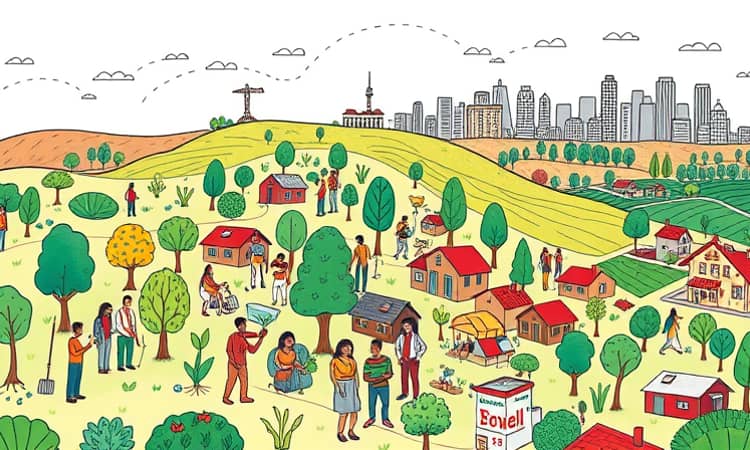
Local investment fuels lasting change. When communities harness targeted funding, they create ripple effects that reach far beyond city limits.
Understanding the CDBG Foundation
The Community Development Block Grant (CDBG) program stands as a cornerstone of urban and rural revitalization. Administered by the U.S. Department of Housing and Urban Development (HUD), it serves over 1,250 metropolitan areas and county governments directly, while states manage allocations for non-entitlement communities.
Despite its critical role, CDBG funding has experienced drastic funding cuts over the past three decades. From a peak recommendation of $4.2 billion for FY 2026 down to $3.3 billion in FY 2025, advocates argue for a restoration to pre-1995 levels, noting the program now serves nearly 50% more communities than it did when it peaked.
Leverage and Impact: Numbers That Matter
One of CDBG’s most compelling attributes is its economic development leverage. Every $1 of CDBG funding attracts over $5 from non-federal sources, amplifying the reach and efficiency of taxpayer dollars.
- 563,236 jobs created or retained since 2005
- Infrastructure improvements for approximately 57 million people
- Public services assisting over 189 million individuals
- Housing support delivered to 1.9 million households
In FY 2023 alone, CDBG-funded activities generated or preserved 14,512 jobs, provided public improvements for 2.5 million people, and delivered social services to 7.5 million residents.
Expanding Horizons with Community Project Funding
Complementing CDBG, the Community Project Funding (CPF) framework empowers local leaders to secure targeted appropriations across federal agencies. This mechanism supports diverse initiatives—from rural broadband to coastal zone management.
CPF’s original 1% discretionary cap has been halved to 0.5%, signaling potential constraints on future appropriations. Local champions must refine proposals for higher impact and stronger alignment with federal priorities.
Fueling Rural Growth Through CDFIs
Community Development Financial Institutions (CDFIs) deliver tailored financial products to underserved areas. In its FY 2026 proposal, the Treasury Department seeks $100 million for a new Rural Financial Assistance Program, requiring 60% of CDFI investments to target rural communities.
Supporting administrative staffing with a $33.1 million request, the proposal underscores a commitment to expanded rural financing networks and innovative infrastructure development. Evidence from 2012–2021 shows CDFI-funded census tracts experienced measurable business growth and employment gains.
Navigating Budget Headwinds and Policy Shifts
Amid growing demand, FY 2026 proposals threaten to eliminate key programs:
- Complete phase-out of CDBG and HOME Investment Partnerships
- 12% cut ($532 million) and consolidation of homelessness grants
- 43% reduction ($26.7 billion) in rental assistance, imposing work requirements and a two-year benefit cap
These changes could dismantle long-standing support systems, leaving low-income and vulnerable populations with fewer safety nets. On the other hand, a dedicated $25 million pool for youth aging out of foster care highlights targeted relief amid broader cuts.
Strategies for Community Advocates
To navigate uncertainty and secure vital resources, local stakeholders should consider:
- Building coalitions across jurisdictions to amplify advocacy
- Leveraging data-driven impact metrics in funding requests
- Aligning projects with federal strategic goals on infrastructure and equity
Engaging with policymakers early and often ensures community voices shape program design and budget outcomes. Crafting compelling narratives around measurable social returns strengthens grant competitiveness.
Looking Ahead: A Vision for Equitable Growth
The coming years will test the resilience of community development frameworks. Shifting from direct appropriations to tax incentives may alter funding landscapes, but local leaders can seize new opportunities by:
- Exploring public-private partnerships to augment federal dollars
- Innovating financing tools, such as social impact bonds
- Scaling proven pilot programs for broader regional adoption
By fostering collaborative investment models and championing policy stability, communities can secure resources for affordable housing, infrastructure, and social services—even in a tight budget environment.
Conclusion: Bridging Local Action and Global Impact
Whether in dense urban centers or remote rural towns, strategic investment catalyzes transformative change. The CDBG program’s multiplier effects, CPF’s targeted appropriations, and CDFI’s rural focus converge to create a mosaic of opportunity.
As advocates, planners, and citizens unite around shared goals, local funding becomes a springboard for global impact—proving that when communities capitalize on every dollar, the benefits extend far beyond their borders.