As global supply chains grow in complexity, stakeholders face mounting challenges in tracking products, verifying sources, and ensuring compliance across every stage of production and delivery. Traditional models, reliant on manual record-keeping and siloed databases, struggle to keep pace with evolving regulations, shifting consumer expectations, and escalating risks of fraud or contamination. Decentralized, immutable ledger technology offers a compelling solution: a dynamic, tamper-resistant record of every transaction, shared across a network of participants. In this article, we explore how blockchain ushers in end-to-end transparency and traceability, unlocking efficiency, trust, and resilience for manufacturers, distributors, regulators, and consumers alike.
With increasing scrutiny on ethical sourcing, food safety, and environmental impact, businesses can no longer afford information gaps. Consumers demand to know where products originate, under what conditions they are handled, and whether they meet regulatory standards. Blockchain delivers exactly that, enabling a verifiable, unbroken chain of custody from raw material to retail shelf.
Transforming Visibility Across the Chain
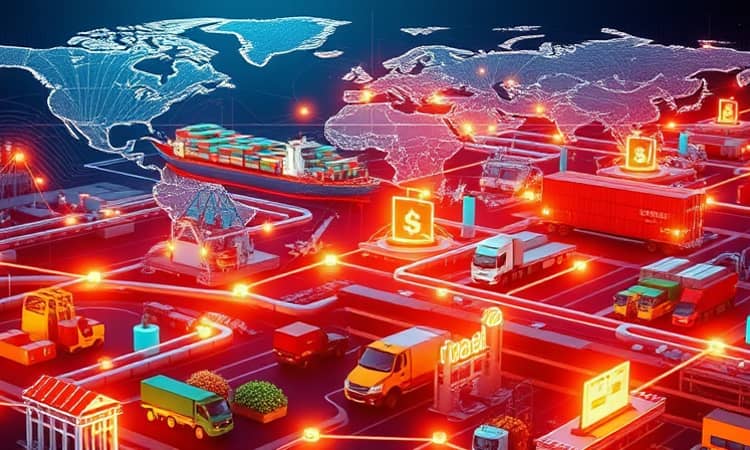
At its core, blockchain brings a single, shared view of all transactions to supply chain participants. Rather than relying on disparate spreadsheets or proprietary databases, each authorized party can access the same real-time record of procurement, production, quality checks, and shipment details. This holistic visibility:
- Eliminates information asymmetry and reduces costly inefficiencies.
- Enables rapid identification of delays, diversions, or quality issues.
- Enhances collaboration by removing barriers between suppliers, logistics providers, and retailers.
Consider the food industry, where contaminated produce can trigger recalls that cost millions and threaten public health. By logging every harvest batch, temperature reading, and shipping milestone onto the ledger, companies can trace contaminants back to a single farm within seconds. Similarly, in the pharmaceutical sector, an immutable, tamper-proof audit trail ensures that every pill, vial, or vaccine dose is accounted for, countering counterfeiting and bolstering patient safety.
Embedded smart contracts further streamline processes by initiating predefined actions—releasing payments upon delivery confirmation or automatically rerouting orders if a quality threshold is not met. As a result, days-long manual reconciliations give way to near-instantaneous transaction settlements, driving milestone-based payments without friction and improving working capital efficiency across the board.
The Technical Foundation of Trust
Blockchain’s transformative potential rests on a set of interlocking technical features. Together, they reshape information flows and build confidence among all stakeholders:
This robust architecture underlies each blockchain deployment, whether it’s a public network open to all or a permissioned ledger governed by industry partners. By choosing the appropriate configuration, companies can align transparency goals with regulatory requirements, such as the Business Supply Chain Transparency on Trafficking and Slavery Act of 2020, and maintain stringent data privacy controls where needed.
Integration with Internet of Things sensors and GPS tracking links physical conditions—temperature, humidity, location—to on-chain records. This convergence enables proactive alerts for potential spoilage or diversion risks, further enhancing supply chain resilience against disruptions.
Real-World Impact and Success Stories
From farm to table and factory floor to consumer doorsteps, blockchain-powered solutions are already delivering measurable benefits:
- IBM Food Trust: Since its launch in 2016, this platform has connected growers, processors, distributors, and retailers on a unified ledger. When a contamination risk arises, participants can pinpoint the source within seconds rather than days, dramatically reducing public health risks and recall expenses.
- Tracifier with Oracle Blockchain: By integrating smart contracts into food processing workflows, Tracifier’s clients have achieved up to 40% cost reductions in operational processes. Automated tracking of shipments and quality checks has slashed delays, minimized waste, and streamlined compliance reporting.
- Luxury Goods Trackers: High-end watchmakers and fashion brands use blockchain to certify authenticity, combat counterfeiting, and share ethical sourcing data with consumers, reinforcing brand integrity and customer trust.
Across industries, blockchain enhances transparency, boosts consumer confidence, and unlocks new revenue streams. Customers can scan QR codes on product packaging to access the entire journey—from raw materials to finished goods—fostering brand loyalty and empowering informed purchasing decisions.
Overcoming Challenges and Embracing the Future
Adopting blockchain is not without its hurdles. Legacy systems, data standardization gaps, and network governance models require careful design. Companies must invest in change management, training, and integration to ensure a seamless transition. However, the stakes are high: those who delay risk being outpaced by competitors who harness transparency to reduce costs, improve service levels, and meet stringent environmental and labor standards.
Fortunately, a growing ecosystem of platform-as-a-service and consulting partners simplifies implementation. Solutions like Kaleido’s Blockchain-as-a-Service offer pre-built templates, governance frameworks, and integration tools that accelerate time to value. Peer-learning networks and industry consortia help establish shared data standards, further lowering adoption barriers.
Looking ahead, advances in AI-driven analytics will transform on-chain data into predictive insights. Companies will be able to forecast demand fluctuations, optimize inventory levels, and map supply chain risk hotspots before they materialize. Simultaneously, regulatory bodies will increasingly recognize blockchain proofs as official records, streamlining audits and certifications across borders.
For executives, operations teams, and technology leaders, the path to success involves three key steps:
- Identify high-risk or high-value supply segments as pilot candidates.
- Form cross-functional teams to define data governance and integration requirements.
- Measure impact with clear KPIs, such as cycle time reduction, cost savings, and compliance rate improvements.
Ultimately, blockchain-forged supply chain transparency is more than a technical upgrade—it’s a strategic lever that transforms how goods move, how partners collaborate, and how trust is built in the digital age. By embracing this new era, organizations can unlock unprecedented visibility, drive sustainable value, and secure their competitive edge in an increasingly interconnected world.
As you chart your blockchain journey, remember that transparency is not a one-time project but an ongoing commitment to open data, continuous improvement, and shared success. The time to act is now—embrace the power of blockchain and illuminate every link in your supply chain.