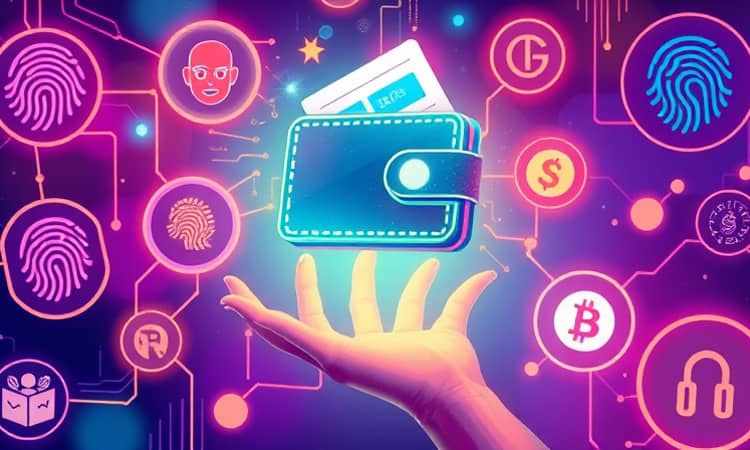
From the moment we wake and unlock our phones with a glance or a touch, biometrics have become woven into the fabric of our daily lives. What began as high-assurance identity checks in government and corporate security has now permeated routine transactions—in retail checkout, food purchases, loyalty programs, and beyond. This transformation signals the arrival of a new era: one where our individual traits are the keys to a seamless, secure financial ecosystem.
The Evolution of Biometrics in Everyday Commerce
Historically, biometric authentication was reserved for highly sensitive environments. Today, far from restricted labs, camera modules and fingerprint sensors authenticate millions of consumers every day. Today, facial recognition integrates with payment terminals, loyalty scan readers, and even public transit gates, demonstrating the scalability of biometric systems. Consumers appreciate the frictionless experience, with adoption rates rising as trust in these methods increases. Face recognition leads the charge with a projected 15.5% compound annual growth rate through 2031. Palm vein technology, once niche, is set to become a $963 million industry by 2026. Meanwhile, on-device models ensure that biometric templates never leave the user’s smartphone, reinforcing the principle of privacy by design for every user.
As biometric accuracy improves—showing a 66.6% reduction in matching errors for rotated faces by 2025—businesses can embrace these methods, confident in both convenience and security. Users no longer wrestle with pins, passwords, or one-time codes. Instead, they present a loyal fingerprint or a subtle nod, and the world opens.
Digital Wallets: The Nexus of Payments and Identity
Digital wallets have evolved from simple card emulators to comprehensive financial and identity platforms. With 4.3 billion users in 2024 expected to rise to 5.8 billion by 2029, wallets are the preferred touchpoint for contactless payments, loyalty points, digital currencies, and even NFTs. Contactless transactions now account for over half of online purchases and nearly a third of in-store sales.
In this environment, biometrics play a pivotal role. By coupling a passkey with a facial scan or fingerprint unlock, users gain access to their funds in under a second—a process 73% faster than traditional passwords. Moreover, wallets can enforce phishing-resistant multi-factor authentication measures, meeting stringent standards such as NIST SP 800-63-4.
AI-Driven Fraud Threats and Biometric Defenses
As attackers leverage sophisticated AI, the arms race intensifies. The rise of deepfakes and AI bots presents a formidable risk. In Q1 2025, 179 major deepfake incidents were recorded, a 19% increase over the previous year. Meanwhile, synthetic identities contribute to $3.3 billion in U.S. credit exposure. In response, modern biometric systems deploy layers of defense:
- Sophisticated liveness detection using multispectral imaging
- Behavioral analytics to distinguish humans from bots
- Cryptographically attested sensor data bound to trusted hardware
Such safeguards ensure that an AI cannot simply replay a recorded image or generate a convincing video. Instead, devices verify pulse, heat signatures, and subtle micro-movements—together composing an unforgeable proof of personhood.
Regulatory and Privacy Challenges
The regulatory landscape remains complex. In the United States, federal privacy law is patchwork, with individual states imposing varied rules. Globally, however, governments are moving toward unified frameworks. The EU’s Digital Identity (EUDI) Wallet, operating on principles of selective disclosure and data minimization, is influencing policy from Asia-Pacific to the Middle East.
Decentralized on-device storage of biometric templates emerges as a solution to compliance headaches. Under this model, biometric data never traverses networks or resides in central databases, significantly reducing the risk of large-scale breaches. Companies can then demonstrate transparent accountability and ethical data handling to regulators and customers alike.
Main Challenges on the Path to Adoption
- Interoperability across devices, platforms, and jurisdictions
- Ensuring accessibility for users in offline or emerging markets
- Maintaining equity and avoiding algorithmic bias against underserved groups
Continuous and Risk-Adjusted Verification
Traditional authentication often stops after a single checkpoint. Next-generation systems adopt a continuous verification model, dynamically adjusting security levels based on context. A user unlocking a wallet at home faces minimal friction; attempting a high-value transfer in a foreign country triggers secondary biometric prompts and geo-fence restrictions. This fluid security model not only deters fraudsters but also empowers users with uninterrupted access.
This approach leverages device integrity signals, behavioral biometrics, and real-time risk scoring to maintain an ongoing assurance of identity without devolving into user fatigue.
Practical Guide: Implementing Biometric Wallets
Organizations seeking to adopt biometric authentication can follow a strategic roadmap:
- Audit existing security and compliance requirements
- Select modalities that match user demographics and device capabilities
- Integrate with SDKs offering attested sensors and liveness checks
- Design inclusive user journeys supporting offline and low-bandwidth scenarios
- Test bias metrics and refine algorithms to reduce false rejections
- Monitor fraud patterns and update risk models continuously
Industry Adoption and Scale
Banking, retail, and crypto wallets are leading adopters. Selfie-based facial capture is now mandatory for identity proofing in many banking jurisdictions due to its proven resilience against spoofing. Retailers enhance loyalty experiences by enabling one-tap checkouts, while blockchain wallets bind keys to biometric locks for unprecedented control over digital assets.
As these sectors converge, new verticals—airlines, healthcare, employment verification—will harness wallets for secure, frictionless experiences. The challenge lies not in the technology alone, but in crafting policies, user education, and infrastructure to support widespread trust.
Looking Ahead: The Road to 2026 and Beyond
By 2026, experts predict that biometrics will be the “security guard at every digital door,” shifting the emphasis from what you know to verifiable characteristics that you are. Central banks will phase out SMS OTPs, and decentralized identity models will dominate national digital strategies.
Global schemes like EUDI will anchor interoperability, while emerging markets will leapfrog legacy systems through offline biometric credentials. The wallet of tomorrow is not just a payment tool—it is an inclusive platform for identity, governance, and economic participation.
Ultimately, the fusion of biometrics and digital wallets promises a world where trust is embedded in every tap, glance, or touch. Through thoughtful implementation, rigorous privacy safeguards, and relentless innovation, we stand at the cusp of an era defined by secure, seamless, and human-centric transactions.