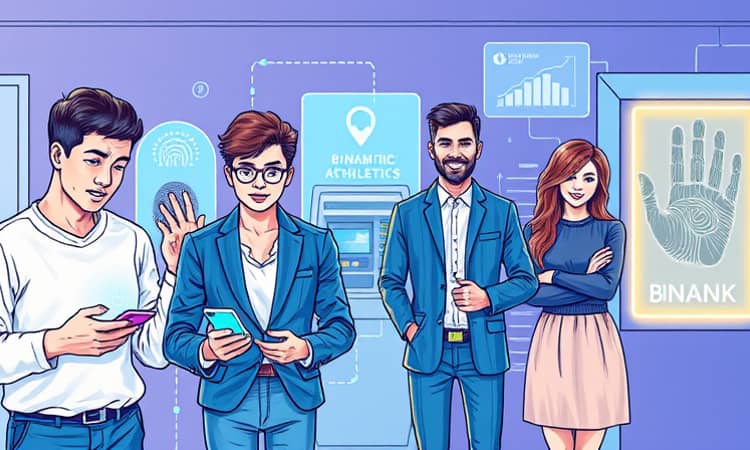
In an era of escalating digital threats, the quest for more robust financial security has reached a pivotal moment. Traditional passwords and PINs no longer suffice against sophisticated fraudsters and automated attacks. Enter biometric authentication: leveraging our physical and behavioral traits to protect the money and data that matter most. As we step into 2025, understanding how these technologies work—and how to use them safely—can empower consumers and institutions alike.
From mobile banking logins to ATM access, biometrics are reshaping how we interact with financial services. This article offers a comprehensive consumer-focused overview of the adoption, benefits, risks, regulations, and future of biometric security in finance.
Market Adoption & Industry Penetration
Biometric solutions have rapidly gained traction across global financial institutions. According to SecurePrivacy.ai, 87% of global banks now employ some form of biometric authentication. In the U.S., 70% of institutions plan to integrate biometrics into payment systems by the end of 2025 (HITRUST). Two-thirds of consumers worldwide report using biometrics and find them easier and faster than traditional methods (Visa, cited in iProov).
Growth projections are staggering: facial biometrics used for payments soared from 671 million users in 2020 to an expected 1.4 billion by 2025 (Juniper Research). Mobile payment transactions secured by biometrics are projected to reach $2.5 trillion by 2024, up from $228 billion in 2019—a nearly 1,000% increase. Remote, contactless transactions dominate, with over 60% of biometrically-verified payments made outside of physical locations.
Types of Biometric Authentication in Finance
- Fingerprint scanning: the most prevalent method in mobile apps and payment platforms.
- Facial recognition: powering remote onboarding, ATM access, and app login.
- Voice authentication: securing call centers and voice-based banking assistants.
- Palm-vein scanning: emerging in next-generation contactless ATMs.
- Behavioral biometrics: analyzing typing rhythm, touchscreen movements, and device handling patterns.
Why Biometrics Are Becoming the Standard
Unique to the individual, biometric traits cannot easily be shared, guessed, or stolen like PINs or passwords. This inherent advantage significantly reduces identity fraud and unauthorized account access.
Behavioral biometrics add a dynamic layer of security. By continuously monitoring typing speed, mouse movements, and device orientation, these systems can flag anomalies in real time. One European bank saw a 52% reduction in payment fraud using dynamic behavioral profiling alone (Corporate Compliance Insights).
Advanced multi-modal biometric systems — combining facial recognition, voiceprints, and behavioral analysis — further decrease synthetic ID fraud by 63% and account takeover attempts by 41% (Number Analytics, 2025). For users, this translates to faster and more seamless access across services, while institutions benefit from reduced helpdesk loads and lower password-reset costs.
Use Cases in Financial Services
Biometrics are no longer experimental. They serve critical roles across consumer journeys and internal operations:
- Mobile banking app login via face or fingerprint.
- Remote account opening and KYC with live video facial checks.
- Contactless ATM transactions using palm-vein or facial scans.
- Approval workflows for high-value transfers enhanced with voice authentication.
Internally, banks deploy biometrics for secure branch entry, data center access, and staff authentication. Automated audit trails log every access event, bolstering compliance and simplifying investigations.
Regulatory & Privacy Landscape
Biometric data is often considered sensitive personal data, triggering stringent legal requirements worldwide. Key standards include GDPR in Europe, CCPA/CPRA in California, and Illinois’s BIPA, each mandating explicit opt-in consent, strict storage guidelines, and data minimization. Singapore’s MAS 2025 guidelines recommend quantum-resistant encryption for biometric templates, while China’s upcoming laws emphasize “least intrusive methods” and real-time alternatives.
Best practices dictate storing biometric information as encrypted mathematical templates, never as raw images, and implementing periodic reconsent workflows. A trend toward dynamic, granular permissions allows users to toggle specific biometric uses on or off in real time, aligning with the principle of “least intrusive” data collection.
Emerging Threats & Countermeasures
As attackers evolve, so must defenses. Biometric spoofing techniques—using masks, high-resolution photos, or deepfake videos—pose real risks. To combat these, institutions employ robust liveness detection with 3D depth mapping, infrared imaging, and AI-driven motion analysis. Additionally, post-quantum cryptography solutions such as CRYSTALS-Kyber safeguard stored templates against future quantum attacks.
Zero-trust authentication models enforce continuous verification, combining biometric checks with real-time risk scores. If a login attempt deviates from typical behavior—say, a new device in an unfamiliar location—the system triggers step-up authentication, such as a secondary biometric scan or OTP.
AI & Risk-Based Authentication
Artificial intelligence supercharges security by analyzing subtle, user-specific patterns. AI-powered behavioral biometrics detect nuances in typing cadence, touchscreen interactions, and device tilt that are nearly impossible for impostors to mimic. Each transaction or login receives a risk score:
- Low risk: familiar patterns allow frictionless access.
- High risk: anomalies prompt additional verification.
This adaptive approach balances security and convenience, ensuring legitimate users glide through routine tasks while deterring sophisticated fraud attempts.
Building Consumer Trust & Business Impact
Consumer confidence is paramount. Accenture reports that 69% of customers would pay premium fees for banks offering clear, user-friendly biometric controls. Transparent communication about data handling, optional fallback methods (e.g., PINs for those who opt out), and responsive customer support foster trust.
For institutions, the ROI is compelling. Employee biometric systems often break even within 14–18 months, thanks to savings in onboarding, access management, and reduced compliance overhead. Globally, biometric authentication is on track to secure over $2.5 trillion in mobile transactions by next year, underscoring its critical role in modern finance.
Conclusion: Embracing the Biometric Future
Biometric authentication is not a passing trend but a foundational shift in financial security. By combining innovative multi-factor methods with stringent privacy safeguards and AI-driven analytics, consumers and institutions can forge a more resilient digital economy.
As you navigate your own banking and payment journeys, consider enabling available biometric options, review privacy settings, and stay informed about emerging technologies. In doing so, you join the global movement toward frictionless, secure financial experiences—ensuring your hard-earned assets remain protected in an ever-changing threat landscape.