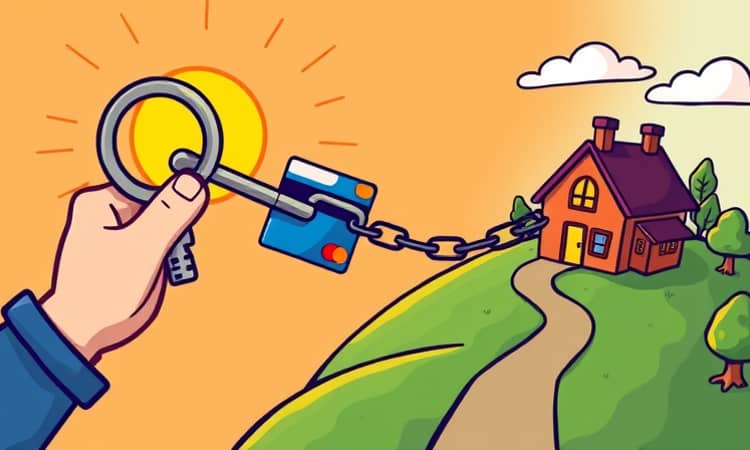
The journey to financial freedom often begins with a single, strategic move.
For many burdened by credit card debt, balance transfers offer a powerful lifeline to reduce costs.
This approach can transform overwhelming balances into manageable payments, paving the way for liberation.
By understanding and leveraging balance transfers, you can take control of your finances.
Imagine shedding the weight of high-interest debt and accelerating your path to a brighter future.
Understanding the Mechanics of Balance Transfers
A balance transfer involves moving debt from high-interest credit cards to a new card with a low or 0% introductory APR for a promotional period.
This period, typically 12 to 21 months, allows you to pay down principal without accruing interest.
For example, transferring $5,000 from a 15% APR card to a 0% card can save hundreds of dollars.
The process consolidates payments and simplifies billing, making debt management more straightforward.
It's a tool designed to maximize every dollar towards debt reduction.
The Profound Benefits of Using Balance Transfers
Embracing balance transfers can lead to significant financial advantages that foster wellness.
- Substantial interest savings during the promo period: More of your payment goes directly to reducing the principal.
- Effective debt consolidation strategy: Combine multiple balances into one, easing management and reducing missed payments.
- Potential credit score improvement: Lowering credit utilization can boost your score over time.
- Simplified financial tracking: Focus on a single payment to streamline your efforts.
- Psychological relief: Watching debt decrease faster can reduce stress and increase motivation.
These benefits make it an attractive option for long-term debt elimination.
Navigating the Risks and Common Pitfalls
However, balance transfers come with risks that require careful attention.
- Costly balance transfer fees of 3%-5%: This can add to your debt if not accounted for.
- Temporary promotional rates: After the intro period, APRs often jump to high standard rates.
- Credit score impacts: New applications cause hard inquiries, and high utilization can lower scores.
- Risk of accruing more debt: Temptation to use old cards or overspend can worsen finances.
- Not suitable for short-term debt: Fees may outweigh savings if payoff is quick.
To mitigate these, discipline and a solid payoff plan are essential.
A Step-by-Step Guide to Successful Execution
Follow this structured process to maximize the benefits of balance transfers.
- Assess your current financial situation thoroughly: Note balances, APRs, and use calculators to estimate savings.
- Research and apply for a suitable card: Look for low intro APR offers and check credit requirements.
- Initiate the transfer: Provide old account details during or after approval.
- Monitor the transfer process: Verify completion and balance accuracy over days or weeks.
- Create and adhere to a payoff plan: Calculate monthly payments to clear debt before the promo ends.
- Avoid new purchases on the card: Prevent interest accrual by using it only for the transferred debt.
By following these steps, you can harness the full potential of this tool.
When to Consider a Balance Transfer
Balance transfers make sense in specific scenarios where benefits outweigh costs.
- If you have high-interest debt that will take months or years to pay off.
- When you are disciplined enough to make consistent payments and avoid new debt.
- If interest savings significantly exceed transfer fees.
- For those with good to excellent credit scores for easier approval.
Conversely, avoid it if you have a history of late payments or can pay off debt quickly.
Using detailed calculators can clarify whether it's the right move for you.
Additional Tips and Insights for Success
To enhance your journey, consider these expert strategies.
- Budget rigorously: Allocate a specific portion of income to debt repayment each month.
- Track progress: Use apps or journals to monitor reduction and stay motivated.
- Explore alternatives like debt consolidation loans for fair credit scores.
- Avoid myths: Balance transfers are not free money; they require careful management.
- Seek professional advice if needed for personalized guidance.
Remember, the key to debt freedom is consistency and commitment.
This table highlights how savings vary, emphasizing the need to tailor the strategy.
Embracing Your Path to Financial Liberation
Balance transfers are more than a financial tactic; they represent a commitment to breaking free from debt.
By strategically moving high-interest balances, you can accelerate your journey towards a debt-free life.
Imagine the sense of accomplishment as each payment brings you closer to independence.
With careful planning and the right approach, debt-free living becomes an attainable goal.
Start today by evaluating your debts and taking that first step towards freedom.
Every small action counts, and with persistence, you can achieve the liberation you deserve.