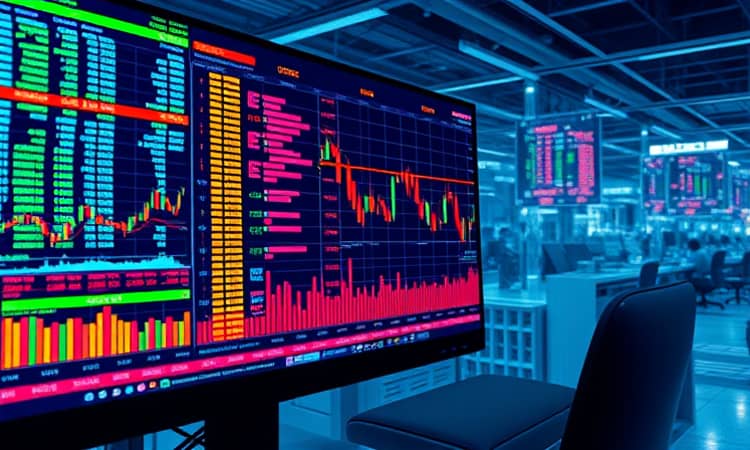
The world of finance is being revolutionized by the rise of automated strategies that execute trades in milliseconds. Today, traders harness analyzing market data like price movements and volume to identify hidden signals. As markets become ever more complex, understanding these systems is crucial for anyone seeking to stay ahead.
In the chapters that follow, you will explore how algorithms leave distinct traces on order books, learn to detect manipulation, and integrate classical chart patterns with automated precision. This journey will empower you with both theory and hands-on techniques, inspiring you to build robust trading approaches backed by data.
The Evolution of Algorithmic Trading
Algorithmic trading began as a tool for institutions to reduce execution costs and slippage. Over time, retail platforms democratized access, enabling individuals to deploy rule-based systems. At its core, an algorithm continuously scans multiple markets, using pre-defined parameters to trade on signals derived from price, volume, and technical indicators.
Strategies range from simple moving-average crossovers to complex statistical arbitrage requiring vast computing power. The proliferation of cryptocurrencies in volatile 2025 markets has further amplified the impact of these automated methods, creating both unprecedented opportunities and new challenges.
Unveiling Algorithmic Footprints
Automated systems leave unmistakable traces, known as algo footprints. These include distinctive behaviors in order books, rapid order placements and cancellations, and sudden liquidity imbalances. During events like CPI releases, these footprints emerge in milliseconds, far faster than any human reaction.
Common footprints include spoofing or layering, where large orders are placed then canceled to create false support or resistance. Liquidity voids occur when orders vanish near key levels, causing unexpected slippage. Momentum ignition bursts can trap unaware traders in false breakouts before reversing sharply.
Detecting and Decoding Footprints
Recognizing these patterns requires specialized tools and a disciplined approach. By combining real-time visualization with quantitative analysis, you can anticipate and adapt to algorithmic distortions.
- Bookmap Heatmap/DOM – visualizes order stacking and hidden liquidity
- CVD (Cumulative Volume Delta) – highlights absorption and momentum shifts
- Time-and-Sales Ticker – reveals trade clusters and rapid-fire orders
- Quote-to-Trade Ratio – flags spoofing and quote stuffing
Implementing these tools in a Python backtesting framework allows you to automate pattern recognition and validate strategies against historical data. This integration of detection with execution is key to maintaining an edge.
Chart Patterns Meet Algorithms
While algorithms excel at speed, classic chart patterns capture the human element of market psychology. By overlaying pattern recognition on automated signals, traders can filter noise and enhance accuracy.
Top patterns like cup-and-handle or ascending triangles often outperform simple rule-based systems. They combine volume confirmation with breakout timing, offering a capture the underlying market psychology that pure algos may miss. In backtests, patterns such as double tops and Gartley harmonics consistently deliver higher success rates under certain conditions.
Navigating 2025’s Volatile Markets
Volatility in 2025 has magnified both risks and opportunities. Algorithmic strategies can exploit rapid price swings, but they can also magnify losses if left unchecked. Understanding how volatility fuels market depth distortions and ignition events is essential for risk control.
To thrive, combine statistical safeguards with real-time monitoring:
- Dynamic position sizing based on market volatility
- Stop-loss orders placed at algorithmic footprint thresholds
- Regular backtesting and parameter optimization
- Stress-testing under extreme events to gauge drawdown potential
Tools, Platforms, and Best Practices
Choosing the right technology stack can make or break your automated edge. Platforms like Bookmap and TrendSpider offer advanced visualization and pattern-detection add-ons. LuxAlgo simplifies backtesting, while uTrade Algos provides turnkey execution modules.
Adopt these best practices to reinforce your strategy:
- Maintain a clean, documented codebase for reproducibility
- Use modular design to test individual components independently
- Monitor real-time performance metrics and drawdowns
- Stay informed on regulatory changes impacting algorithmic trading
Embracing the Future of Trading
Algorithmic trading is more than just automation; it represents a fusion of quantitative rigor and human intuition. By unveiling market patterns and decoding algorithmic footprints, you gain a deeper understanding of how modern markets function.
Whether you’re an institutional fund manager or a solo retail trader, these insights empower you to craft resilient strategies that adapt to shifting market conditions. Embrace the challenge, integrate the tools, and let data-driven precision guide your journey toward consistently smarter trading decisions.